
Key Benefits of Adopting AI Voice Agents
Implementing Voice AI agents gives businesses a competitive advantage by streamlining operations, improving customer experiences, and driving measurable business growth. From round-the-clock availability to personalized engagement, these intelligent systems are changing how organizations communicate and serve their customers.
a. Operational Benefits
With 24/7 availability, businesses can give uninterrupted support across time zones. This system’s scalability during high demand ensures that it can easily handle multiple queries simultaneously, reducing call handling time and improving overall efficiency and productivity.
b. Customer Experience Benefits
AI voice agents enable human-like conversation, making interactions more natural and engaging. Its ability to deliver personalized interactions to enhance customer satisfaction, while faster resolutions give quick problem-solving without long wait times.
c. Business Benefits
The best AI voice agents help companies achieve lower operational costs by automating repetitive tasks. They also give better analytics from voice data, providing valuable insights and contributing to improved conversion rates through proactive, data-driven engagement.
Exposing Spko: A Case Study in Real Time Voice AI Agents
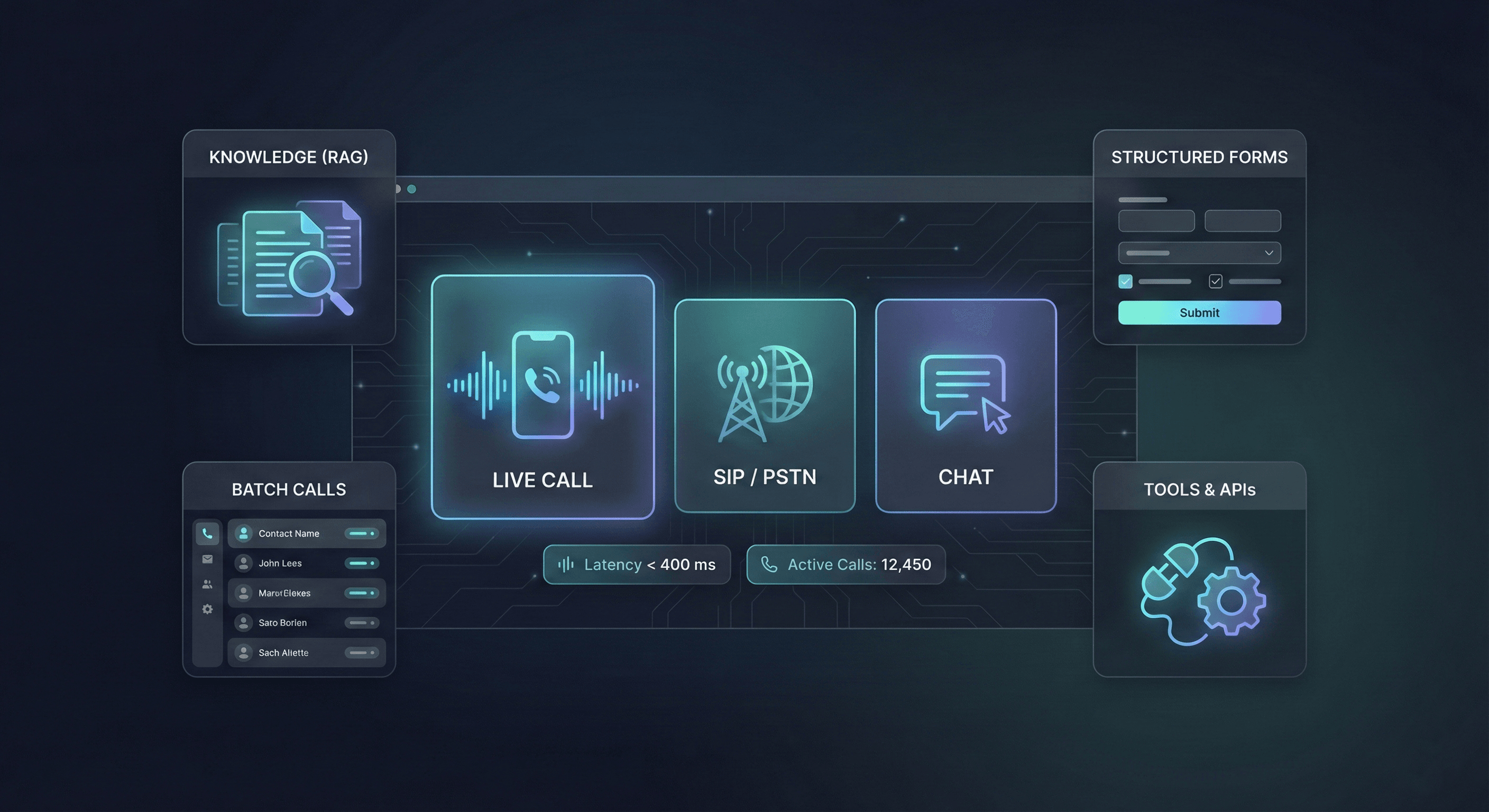
Spko is a voice first AI agent platform built for real time phone conversations with end to end latency under about 400 ms. It handles streaming transcription → reasoning → speech, connects with tools and APIs, works on SIP and PSTN telephony,while also connecting over browser and chat and supports contextual retrieval so agents can actually complete tasks and not just chat. It includes a builder playground, structured forms, batch outbound calling, and flexible voices to help teams move from prototype to production without needing to create an entire voice stack on their own.
What Are Voice AI Agents?
The traditional phone experience with long wait times, rigid menus, and agents managing queues is still one of the most frustrating parts of customer operations. Simple IVRs and basic chatbots can answer simple questions, but they usually fail at the real nature of human speech such as interruptions, unclear intent, shifting topics, emotional tone, and messy real world requests. Modern voice AI agents aim to address this by supporting natural back and forth conversations in real time. Instead of pushing callers through menu trees, these systems listen continuously, interpret intent, and respond conversationally while performing actions in external systems. Spko is part of this growing group of platforms that make live production grade phone agents possible without forcing teams to assemble audio pipelines, telephony components, or low latency streaming systems on their own.
How Real Time Voice AI Works
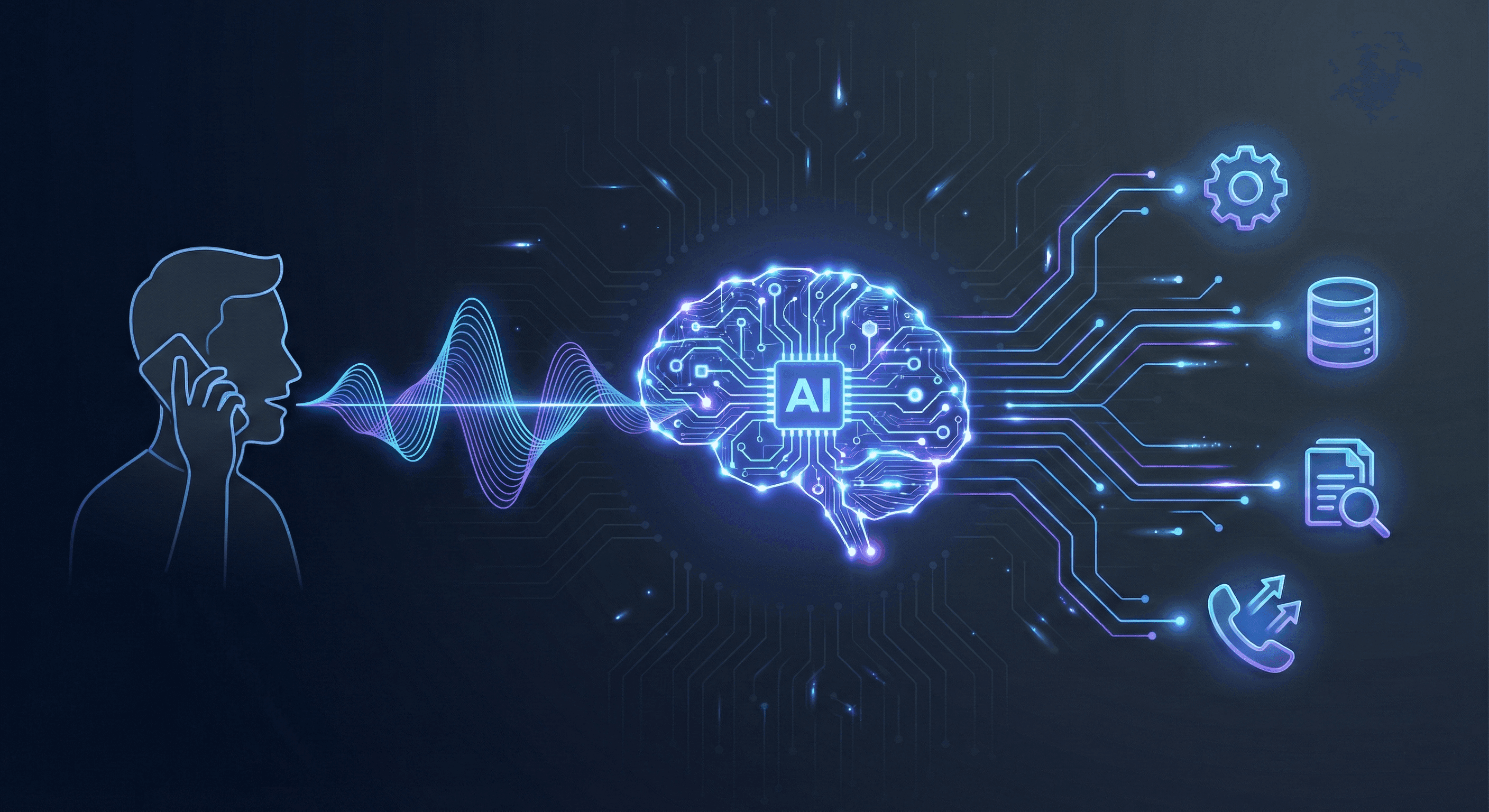
At a general level, voice agents follow a streaming pipeline that runs without stopping while the caller is speaking. Spko uses this structure and provides it over SIP and PSTN phone lines: Streaming Speech to Text Audio from the caller is transcribed in real time using partial text predictions. The agent does not wait for full sentences, which keeps the conversation flowy and responsive. LLM Reasoning and Agent Logic As words appear, the model identifies intent, keeps track of conversation state, and decides what to do next such as reply, ask something, call a tool, or start an action. Streaming Text to Speech The agent generates and speaks responses in small pieces, allowing callers to interrupt normally and preventing unnatural pauses. The user can interrupt at any given time and add what he wants like any natural human conversation will go. This end to end streaming design supports latency under 400 ms, which is generally the limit where phone conversations begin to feel human.
Voice AI Now? Key Benefits
Modern voice stacks offer advantages that make them ready for real operations rather than just early demos: Sub 400 ms Real Time Interactivity Conversations feel human, responsive, and interruption friendly. Native Support for SIP and PSTN Agents can run on real phone numbers through existing telecom systems. Spko also provides Multiple voice supported by Design Understanding many accents expands global reach. Contextual Conversations Agents can maintain memory inside a call, use previous details, and adapt as needed. High Call Handling Capacity Parallel scalable agents reduce queues and allow round the clock availability. Faster Integration Workflows Connect APIs, CRMs, and internal systems without rebuilding telephony pipelines. Lower Operational Cost Automated conversations lower human workload, especially for repeated tasks. Structured Outcomes Agents can collect clean data, fill forms, and start workflows during the call.
Core Capabilities of Spko
-
Contextual Retrieval (RAG) for Accurate Answers Instead of relying on general model knowledge, Spko uses retrieval augmented generation to base responses on your real documents and policies. Spko uses Weaviate DB, implementing a hybrid approach. This ensures fast retrieval using keyword matching along with semantic word search.This allows the agent to: Answer using accurate and current information Follow internal guidelines Maintain brand safe responses Support complex or large product sets RAG helps the agent stay context aware, which is essential in support, sales, or policy focused industries.
-
Tool and API Integration Spko agents can call tools during the conversation using schema based function definitions. This allows the agent to take actions instead of only talking.Common actions include: Checking customer information Looking up orders or invoices Teams do not need to build the tool calling protocol because Spko manages the orchestration and data format. This bypasses the manual labour involved and provides simple plug-and-play for end users.
-
Playground: From Prompt to Live Call The Playground provides a useful space for quick iteration: Adjust system prompts and agent character Attach tools and functions Test real calls Try different speaking styles and voices Review transcripts and recordings Try chat as well as voice It supports designing agents, simulates and then refines the workflow made specifically for voice interactions. This multi agent customization connected with phone numbers allows how Call centers would operate in real scenarios.
-
Structured Forms Spko gives users the option to attach structured forms to an agent. Users define custom form fields and while the agent is conversing with the caller, it fills those fields in the background. Once the call ends, the completed form can be pushed into your databases, CRMs or used as clean input for RAG pipelines. This turns calls into consistent, high-quality structured data. Data is automatically saved, reducing manual note-taking. Spko attaching forms with agents gives users:
- Structured Data as Output to playaround with
- Improves Reporting and Analytics
- Easier to automate downstream workflows.
-
MCP Spko can attach MCP tools directly to voice agents. The same tools that power chat or internal copilots become available inside live phone calls, so the agent can fetch data, run checks and trigger actions through a shared MCP layer. This lets teams reuse one set of integrations across channels and keep behavior consistent without building a separate stack for voice.
-
Batch Calling: Outbound at Scale For outbound use, Spko can manage large calling lists automatically. Each call adjusts to the person rather than following a fixed script.Uses include: Appointment reminders Renewal or payment alerts Customer follow ups Re engagement campaigns
-
Voice and Conversational Quality Spko treats voice as an important part of the design: Several voice options for different brand styles, control over pace, energy, and speaking tone, tuning for turn taking to avoid talking over callers. Along with low latency streaming, conversations feel intentional and natural. Human-like conversations make the use case of Spko more refined.
Where Spko Fits Imagine a SaaS company using Spko for Level 1 support and billing reminders: Inbound Support Connect the support phone number through SIP. Overflow or after hours calls go to the agent. RAG indexes help docs, FAQs, and troubleshooting guides. Tools let the agent check accounts, reset passwords, and create tickets. Complex situations move to humans with transcripts and structured forms attached. Outbound Operations Billing reminders or renewals run through batch calling. The agent confirms identity, explains status, and records results. Tool calls send emails or follow up tickets automatically. The outcome is lower backlog, faster resolutions, and cleaner operational data.
How Spko Helps Teams Move Faster
By providing telephony, streaming, tool integration, RAG, forms, and a builder experience, Spko removes the infrastructure load from teams. Instead of spending months building audio pipelines and handling WebRTC, SIP, TTS, and STT components, teams can focus on what the agent should do rather than how it works. Spko supports:
- Rapid prototyping to real production usage
- Reliable deployment on phone lines
- Consistent data output across all calls
- Smooth integration with existing systems
- Lower operational effort with higher coverage
The Future of Voice AI
Real time voice agents are becoming a meaningful and practical part of customer operations. As latency improves and contextual reasoning gets stronger, AI driven phone interactions will feel less like bots and more like focused virtual staff who are fast, available, and consistent. Spko is built to support this shift by giving teams a clear path to deploy dependable voice automation without losing control over experience, brand, or accuracy.